
Twelve Creatures of Brazilian Folklore
Published · text produced with AI under human direction and review; quoted passages were checked word for word against the digitized editions cited.
The short answer
Twelve creatures, counted down from twelve to one. Each account follows a person who wanted something simple and the price that person paid. The film draws on written texts published between 1863 and 1921, naming the source for each creature. It premieres on Friday, 30 October 2026, at 8 p.m. Brasília time (UTC−3). These are recorded stories and beliefs, not demonstrated encounters.
Film facts
- Title
- Twelve Creatures of Brazilian Folklore.
- Premiere
- Friday, 30 October 2026, 8 p.m. Brasília time (UTC−3), on YouTube.
- Length
- about 12 minutes, estimated from the script.
- Format
- a countdown, with source cards on screen.
- Languages
- Narrated in Brazilian Portuguese. An English audio track is planned for the same video; this page will say so when it is live.
- Audience
- adults. This is folklore and horror, not a children’s programme.
- Sources
- Simões Lopes Neto (1913); Monteiro Lobato (1918 and 1921); Bates (1863); Smith (1879); Barbosa Rodrigues (1890); Pereira da Costa (1908); Leite de Vasconcellos (1882); Couto de Magalhães (1876).
- Narration
- synthetic, with human research, direction and review.
- Images and animation
- generated with AI.
- Production
- Águas Profundas, under human direction.
Where the story comes from
The opening tale in Simões Lopes Neto’s Lendas do Sul (1913) makes the Boitatá a snake changed by what it eats:
Our translation
But it ate only the eyes and nothing, nothing more.Original (Portuguese)
Mas só comia os olhos e nada, nada mais.
This is a literary shaping of southern tradition. Other creatures come through collectors, travellers or newspaper readers. The film names the author rather than merge those records into one anonymous Brazilian belief. The Boitatá guide explains this version and the source policy explains the edition limits, including paraphrase only from the modern-spelling O Saci.
Chapters
- Opening: a canoe at the mouth of the Rio Negro
- Act one: the price of luck
- Act two: the price of desire
- Act three: the price of secrets
- Act four: the familiar and the unforgettable
- Closing: what Halloween does not know
These are the sections in the production script, translated here. Final timestamps are not available in the source pages.
The twelve and who recorded them
The subjects below do not reveal the countdown order.
- Boitatá, Negrinho do Pastoreio and Caipora: João Simões Lopes Neto, Lendas do Sul (1913).
- Cuca and Iara: Monteiro Lobato, O Saci (1921).
- The Headless Mule and Saci: O Sacy-Perêrê (1918), with notes from Simões Lopes Neto and Pereira da Costa.
- Boto: Henry Walter Bates, The Naturalist on the River Amazons (1863).
- Matinta: Herbert H. Smith, Brazil, the Amazons and the Coast (1879).
- Curupira: João Barbosa Rodrigues, Poranduba Amazonense (1890).
- Werewolf: Pereira da Costa, Folk-lore pernambucano (1908), and José Leite de Vasconcellos, Tradições Populares de Portugal (1882).
- Cobra Grande: Couto de Magalhães, O Selvagem (1876).
Frequently asked questions
When does the film premiere? On Friday, 30 October 2026, at 8 p.m. Brasília time (UTC−3), on YouTube.
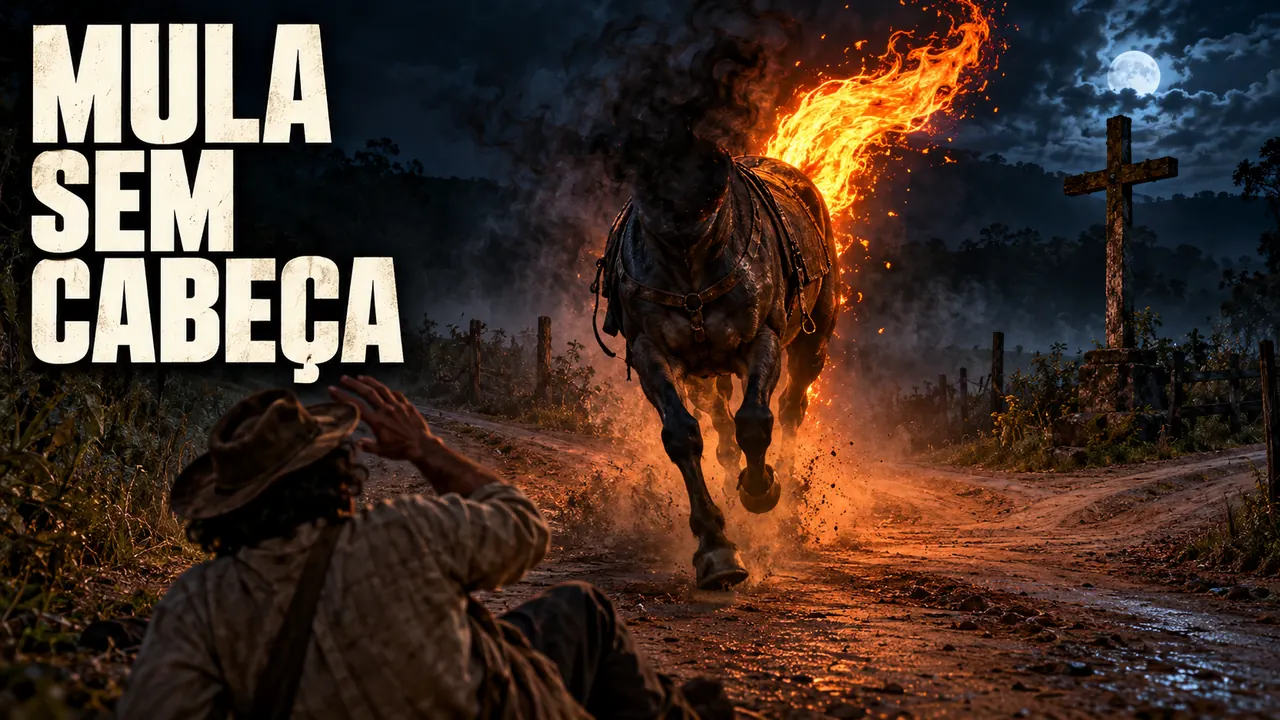
Which twelve creatures appear? Boitatá, Negrinho do Pastoreio, Cuca, Caipora, the Headless Mule, Iara, Boto, Matinta, Curupira, the werewolf, Saci and Cobra Grande.
Is there an English version? Not yet. The film is narrated in Brazilian Portuguese. An English audio track is planned for the same video, and this page will say so when it is live.
Where do the stories come from? Written public-domain accounts published between 1863 and 1921. The film identifies the source on screen, and this page lists the authors and works.
Is it for children? No. This is Brazilian folklore and horror for adults.
How is AI used? The voice is synthetic; images and animation are generated with AI. Humans research the material, choose the sources, check quotations and review the result.
One account at a time
Further reading
Lendas do Sul
João Simões Lopes Neto (1913)
Read "A Mboi-tátá", the short opening tale: the flood, the snake that eats only eyes, and the two ways to escape it. In Portuguese, and openly literary.
O Selvagem
Couto de Magalhães (1876)
One paragraph on the Mboitátá as a fire snake that protects the fields, inside a list of beings that also includes the Saci and the Curupira.
Poranduba Amazonense
João Barbosa Rodrigues (1890)
In Portuguese and Nheengatu: the hunter and the Curupira, and the Curupira who came home as a husband, each with a near word-for-word translation.
Cite this page
Vigil Page. "Twelve Creatures of Brazilian Folklore." Published 25 October 2026. https://vigilpage.com/films/12-creatures/
Revision history
- : First publication.
Read next
- Curupira
- Saci
- Werewolf folklore
- Boitatá
- The Headless Mule
- The Saci film and the werewolf film.
Read this page in Portuguese: As 12 Criaturas Mais Assustadoras do Brasil.